Water follows the curve. Leaves slide off.
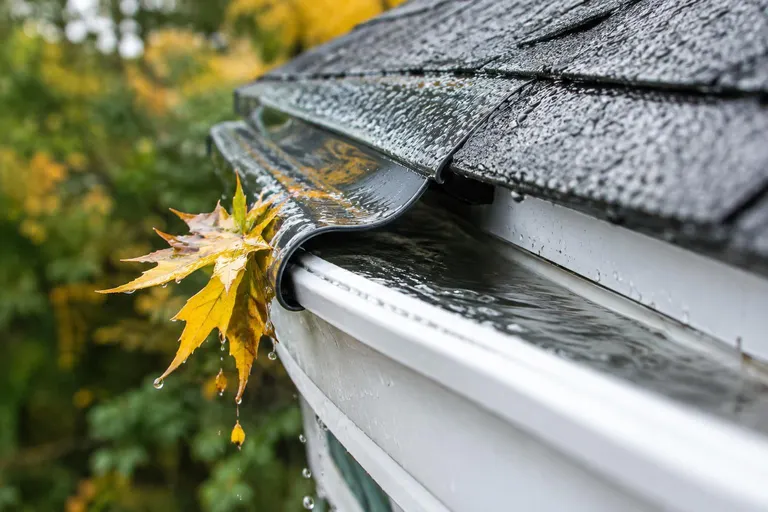
Reverse-curve guards, sometimes called hoods, use surface tension to pull water around a rounded nose into the gutter while leaves and debris slide off the front edge.
- Style: Solid hood with a rounded nose
- Water path: Surface tension into a slot
What it is, and why it matters.
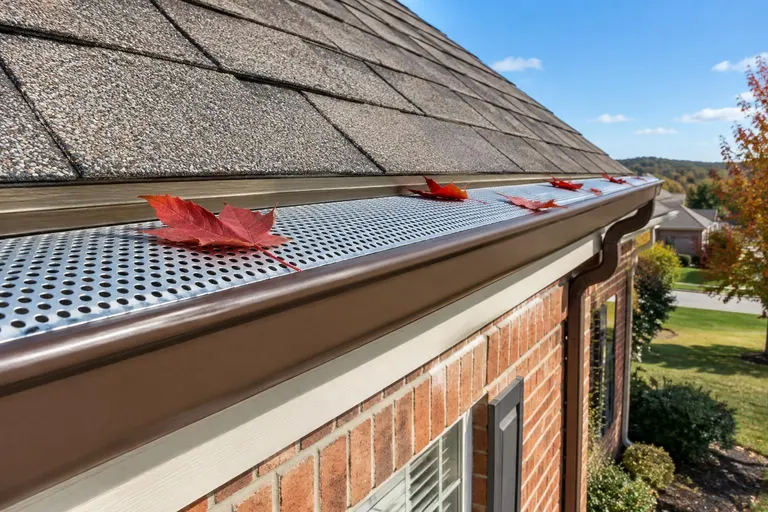
A reverse-curve guard is a solid hood that sits over the gutter. Rain running down the roof clings to the curved nose, turns the corner and drops into a slot, while leaves and larger debris slide off the front. It has no mesh to clog, which suits yards with big leaves.
These guards depend on the roof pitch, the shingle edge and a correct installation angle, and they can overshoot in a hard downpour on low or very steep roofs. We look at your roof before recommending one and tell you honestly if a mesh or screen style would handle your roof better.
Four things done right.
No mesh to clog
A solid hood has no openings for fine debris to settle in.
Low profile
The slim hood follows the roofline and looks tidy from the ground.
Roof-aware advice
We check pitch and edge details first, because hoods work best within a range.
Honest limits
Fine seeds and needles can still enter the slot, and hard downpours can overshoot. We explain that up front.
From first call to reverse-curve gutter guards.
- 1
Check pitch and edge
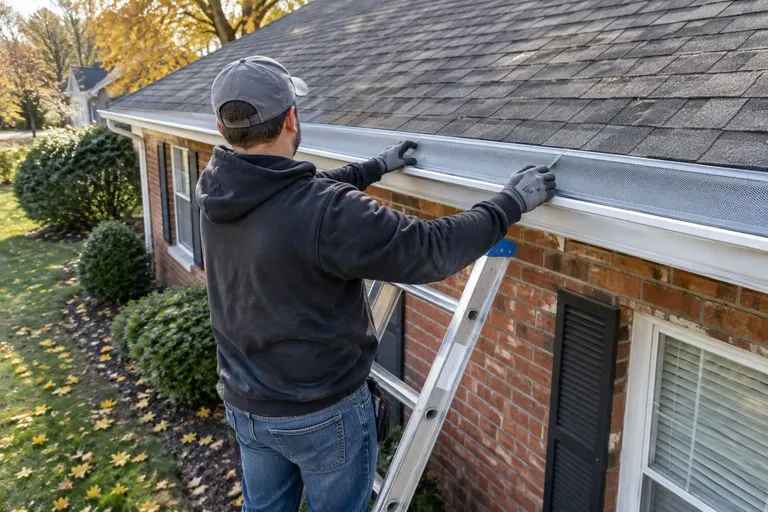
We measure roof pitch and look at the drip edge and shingle overhang.
- 2
Choose the style
If a hood suits your roof, we pick the profile. If not, we say so.
- 3
Set the angle
The guard is fastened at the right angle so the nose catches water.
- 4
Rain test
Water is run down the roof edge and we watch it turn into the gutter.
Often chosen together.
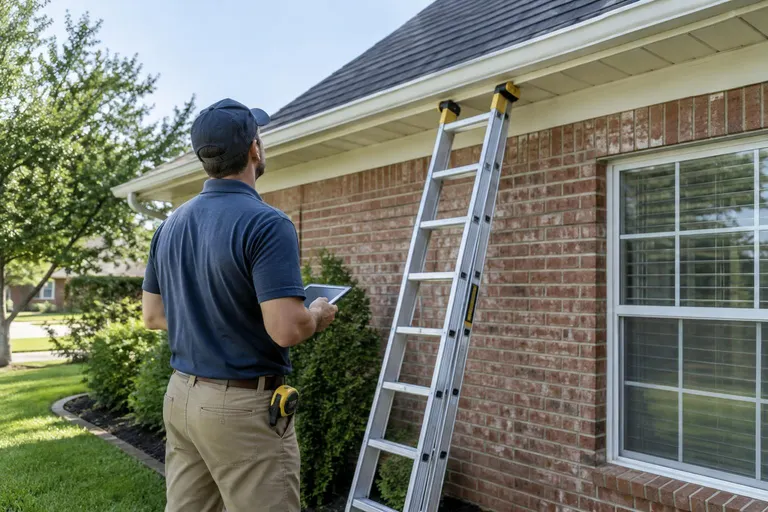
Reverse-Curve Gutter Guards across Middle Tennessee.
We do this work for homes and businesses from Nashville, Franklin and Murfreesboro to Gallatin, Hendersonville, Lebanon and Columbia.
Reverse-Curve Gutter Guards: common questions
Do reverse-curve guards work in heavy rain?
They can overshoot in extreme downpours, especially on low-pitch or very steep roofs. We look at your roof before recommending one.
Are hoods good for pine needles?
Needles can slip into the slot of some hoods. If you have pines, a fine mesh is often a better match.
How do I get an estimate for reverse-curve gutter guards?
Fill in the form or call or text 615-357-7797. Photos of the gutters and the trees usually give us what we need, and we send a written price. Larger jobs start with a short visit.
Ready to talk about reverse-curve gutter guards?
A short visit or a few photos, and a written price. A real person calls back promptly.