
Skip the dirty first rain.
A first flush diverter sends the first dirty runoff away from your tank, so collected rainwater starts cleaner.
- Typical visit: Size, install, test
- Parts: Standpipe, ball valve, drip outlet
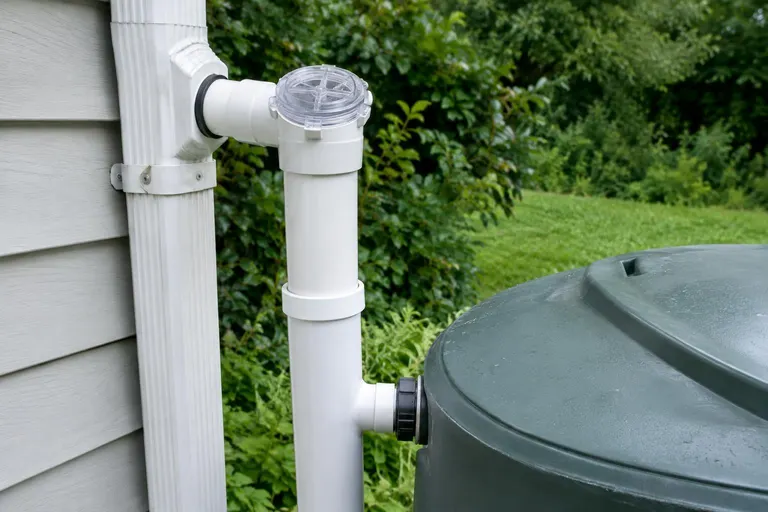
What it is, and why it matters.
The first minutes of a rain wash dust, pollen and bird droppings off the roof and into the gutter. A first flush diverter catches that first batch in a standpipe and lets later, cleaner water continue to the tank.
We install diverters on harvesting systems, size the standpipe to the roof area, add a slow-drip outlet that resets it after each rain and show you how to check and clean it.
Four things done right.
Sized to the roof
Larger roofs need larger standpipes.
Resets itself
A drip outlet empties it between rains.
Easy to check
A clear cap shows what has collected.
Cleaner tank
Less sediment reaches the tank.
From first call to first flush diverters.
- 1
Size the standpipe
We calculate capacity from the roof area.
- 2
Install
The diverter is plumbed into the downspout.
- 3
Set the drip
The slow-drip outlet is adjusted.
- 4
Test
We run water and check the reset.
First Flush Diverters across Middle Tennessee.
We do this work for homes and businesses from Nashville, Franklin and Murfreesboro to Gallatin, Hendersonville, Lebanon and Columbia.
First Flush Diverters: common questions
Do I need a first flush diverter?
It is a good idea for any tank used for watering edibles or for systems with fine filters, because it cuts the amount of debris reaching the tank.
How often does a diverter need cleaning?
A look every few months is usually enough, and more often in pollen or leaf season.
How do I get an estimate for first flush diverters?
Fill in the form or call or text 615-357-7797. Photos of the gutters and the trees usually give us what we need, and we send a written price. Larger jobs start with a short visit.
Ready to talk about first flush diverters?
A short visit or a few photos, and a written price. A real person calls back promptly.