
From first call to a gutter that drains.
Every visit follows the same six steps, from the first phone call to the maintenance plan that keeps the system clear. Here is what happens, in what order and why.
You call or text
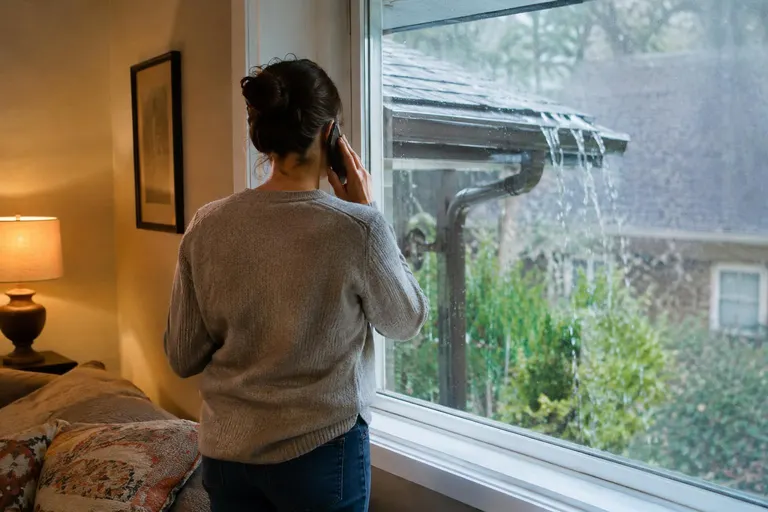
A real person asks what you see: overflow in the rain, stains on the siding, a clogged downspout. Photos of the gutters help us come prepared.
A call, a text or the formWe inspect the system
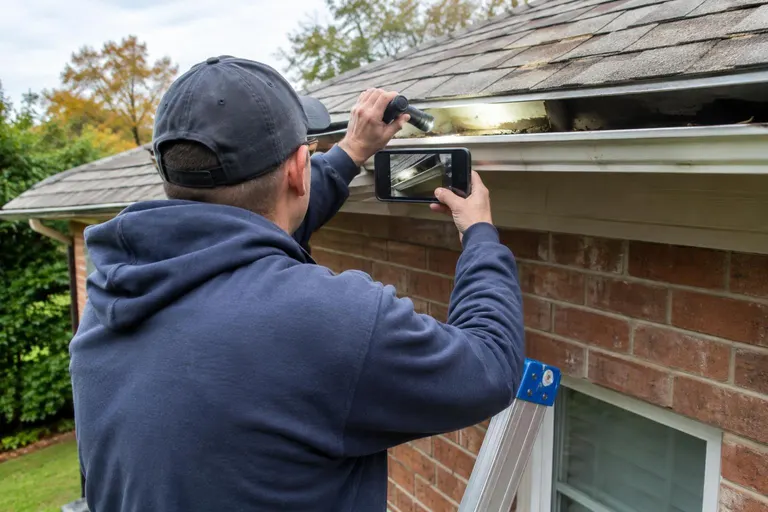
We check slope, hangers, joints, outlets and the fascia, photograph what we find and look at the trees and the roof edge.
Photos you keep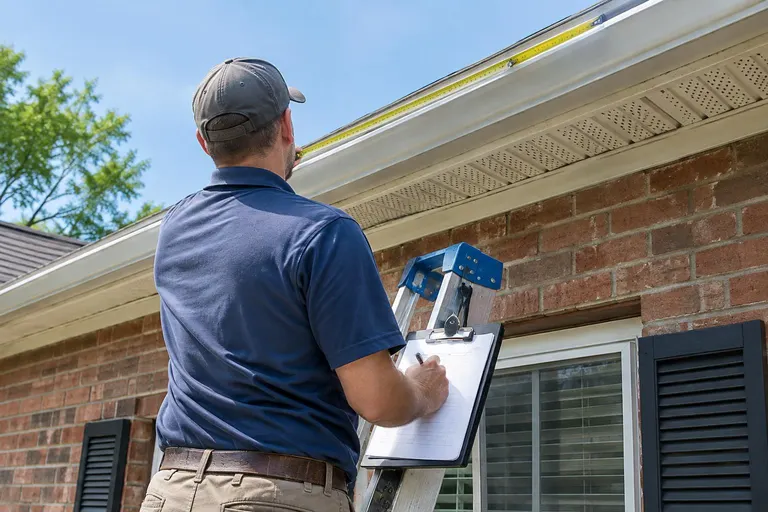
We measure and plan
Footage, corners, downspouts and gutter size are measured, and you get a written estimate with options side by side.
A written estimate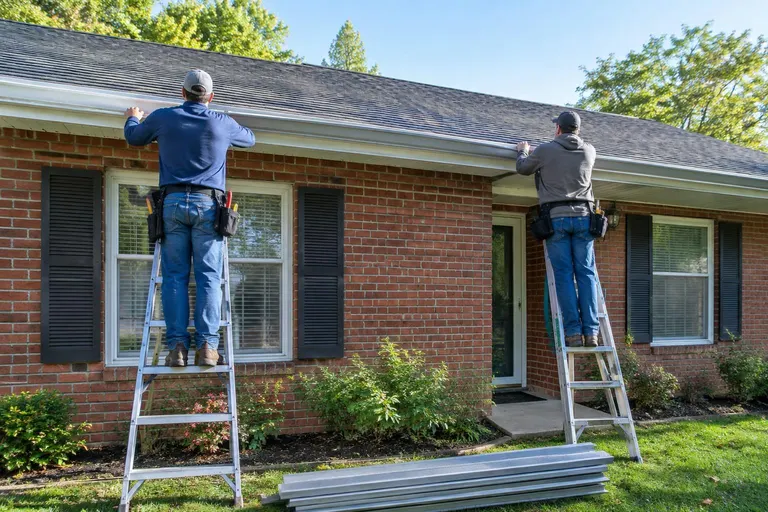
We install with care
Gutters are re-hung and guards are fitted section by section, with ends sealed and downspouts connected.
Tidy crews and clean lawns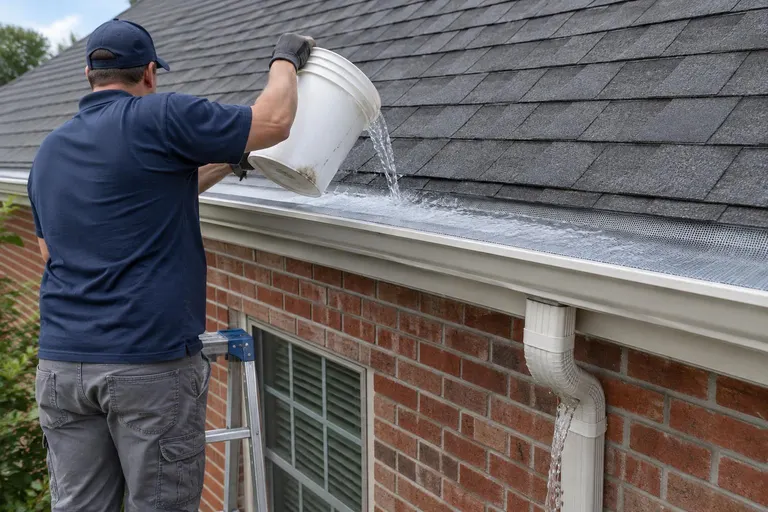
We test with water
We run water across the guard and watch it enter the gutter and leave the downspout before we pack up.
A flow test, every time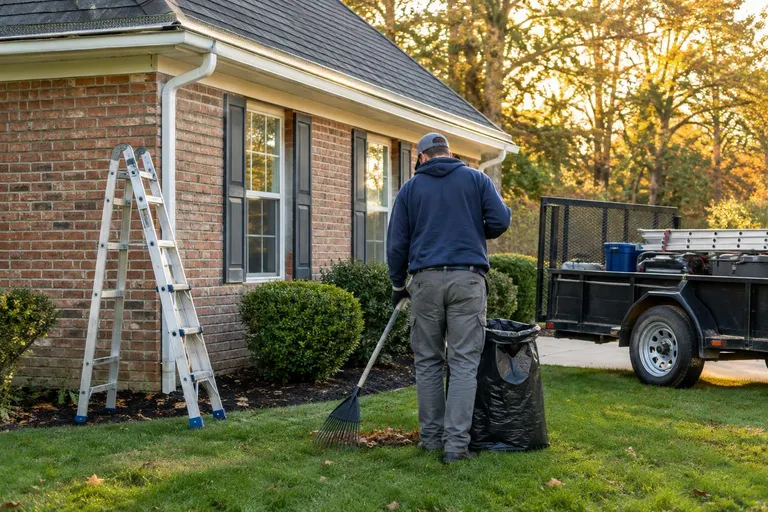
We keep it running
A maintenance plan puts rinses and checks on a schedule, so small problems are found early.
Reminders and priority booking
The path, part by part.
Tap a part of the roof edge to see what it does and what can go wrong.
Shingles: Where the water starts
The roof sheds rain toward the edge. Worn or lifted shingles near the edge can send water behind the gutter or shed grit that fills it.
Drip edge and flashing: The seal at the edge
Drip edge and gutter apron guide water off the roof and into the gutter instead of behind it, protecting the wood.
Fascia board: What the gutter hangs on
The fascia is the trim board the gutter attaches to. Water running behind the gutter soaks it, and soft wood will not hold hangers.
Gutter channel: The trough that carries it
The channel must fall slightly toward each downspout. A sag holds standing water and fills with debris in even light rain.
Hanger: The support that holds the pitch
Hangers set the spacing and the slope. Loose or missing ones let the gutter sag and pull away from the house.
Gutter guard: Keeps the leaves on top
A guard lets water in and keeps leaves and larger debris out. The right type depends on your trees and your roof.
Downspout and elbow: The way out
Downspouts carry the water to the ground. Too few or too small and the gutter overflows, and clogs here back water up the whole run.
Splash block and grade: Where the water lands
What happens after the downspout matters. Extensions, splash blocks and a slope away from the wall keep water off the foundation.
Your quick prep list.
- Note where water spills over or stains the siding, and when
- Take photos of the gutters, the downspouts and the trees over the roof
- Note how old the gutters are and any past repairs
- Clear a path for a ladder at each side of the house
- Try the Guard Matcher or the Downpour Calculator
Six promises we keep.
We look before we quote
A roofline walk and photos come first, so the plan fits the house.
Water first, leaves second
Slope, hangers and downspouts are checked before anything is covered.
Everything in writing
Type, footage, price and schedule are written down before work starts.
Honest about limits
If a guard is the wrong fit for your trees or roof, you hear it from us first.
A clean yard at the end
Debris is bagged, the lawn is raked and old material leaves with us.
A real person on the phone
Call or text and a real person answers.
Process questions
How do I get a price?
Fill in the form on any page, or call or text 615-357-7797. Photos of the gutters and the trees help us come prepared. We inspect, measure and photograph, then send a written estimate with your options side by side.
How much do gutter guards cost?
It depends on the guard type, the feet of gutter, the number of stories and the condition of the gutters. Fine mesh and stainless cost more than screens or inserts. Our Gutter Run Planner estimates your footage, and our Break-Even Bucket compares guards with paying for regular cleanings.
How long does an installation take?
Guards on an average house often take a few hours to a day, and seamless gutters on a full house usually take a day. You get a written schedule before we start, and crews tidy the yard as they go.
Can guards go on my existing gutters?
Usually yes, if the gutters are sound and hang at the right pitch. We check slope, hangers and joints first and repair them if needed, because a guard on a sagging gutter only hides the problem.
Start with the easy part.
Call, text a photo or fill in the form. We look, measure, plan, price and confirm before any work begins.